Showing posts with label Stories. Show all posts

Saturday, September 20, 2014

060. The Home Coming. Rabindranath Tagore Story. Reintroduced by P S Remesh Chandran

060.

The Home Coming. Rabindranath Tagore Story. Reintroduced by P S Remesh Chandran

Editor, Sahyadri Books & Bloom Books, Trivandrum


First published: 14th Sep 2014
 

Rabindranath Tagore was an educator, social reformer, poet, playwright, novelist and short story writer. His poetical collection Gitanjali was awarded the Nobel Prize for Literature. Home Coming is the tale of a 14 year old boy who was a nuisance to his mother, was sent away for studying and died there unloved and longing for his home. There has not been a single person in India who did not weep after reading this Tagore story. 

The boy grew up lazy, wild and violent and thought about doing new mischiefs every day.


Phatik Chakravarthi was a fourteen year old Bengali boy whose father died very early. He grew up lazy, wild and disobedient. His younger brother Makhan Chakravarthi was quiet, good and fond of reading. Phatik thought about doing new mischiefs every day. One day he and his retinue of boys pushed into the river a wooden log meant to be shaped as the mast of a boat. Makhan, objecting to this and sitting firmly on the log, was thrown to water along with the log. At home, when he was questioned about this, he beat not only his brother, but his mother also. It was then that his uncle from the far Calcutta City arrived. He agreed to take the boy along with him to Calcutta to be educated there. The boy was only glad to leave, but the mother was only half-relieved and half-sad. 

He missed the meadow, mountain and river in his native village, became a failure at school and began to always ask, when holidays would come.


Phatik's uncle had three sons of his own and his aunt did not like this new addition to their family. A fourteen year old boy will have his own problems too. He was fast growing up. He was neither a child nor a man, crossing the line in between. He missed the meadow, mountain and river of his native village. Therefore it was no wonder he became a failure at school. He answered no questions, was beaten badly daily at school and ridiculed by all including his cousins. He grew impatient about returning to home and began always asking, when the holidays would come.

 
In his delirium, he talked about things in his native village, asked his mother not to beat him anymore and called out fathom-marks which steamer-sailors in his native village river did.
  
One day Phatik lost his lesson book and was scolded and abused much by his aunt. It served as the last hurt to break him. On a rainy afternoon after school, feeling fever and headache, he sought shelter somewhere and did not return home. He did not want to trouble his aunt any more. Police help was sought the next day. They found him and brought him home, shivering and fallen into a delirious state. He talked about things in his native village, asked his mother not to beat him anymore and called out fathom-marks which steamer-sailors in his native village river did. He moved restlessly, his hands beating up and down. His condition seemed critical to the doctor, and his mother in the village was sent for. When his mother arrived moaning and crying, and calling his names, he was nearing his eternal home which is Heaven. His last words were: Mother, the holidays have come. 

Tagore's story Home Coming was one of the two first glances into the grief and sorrow of little minds, the other being Coventry Patmore's poem, Toys.


The question is how we treat our children. Children are the flowers of humanity. Yet, we do not see the grief in those tiny hearts. Up to four years, a child is said to be in the hands of the God, but since then they are this World's property. A bit of love, a soft touch of solace or a tiny word of consolation would be enough for them, but we do not spare them. Millions of children are worn out for want of care, nursing, assistance. Tagore was purposeful in writing such a story as this to open the world’s eyes towards the world of children’s deep sorrows, unheeded by the grown up world. No wonder he was dedicated to children and started that India’s World University, Saanthi Nikethan, where teachers and students sat beneath mango tree shades and learned. Tagore's this story was one of the two first glances into the grief and sorrow of little minds, the other being Coventry Patmore's poem, Toys.


(Prepared as a lecture to literature students in 1996)


Dear Reader,
If you cannot access all pages of P.S.Remesh Chandran, Editor, Sahyadri Books & Bloom Books, Trivandrum, kindly access them via this link provided here:
https://sites.google.com/site/timeuponmywindowsill/wiki-nut-articles


Also visit Bloom Books Channel In You Tube

Meet the author

PSRemeshChandra


Editor of Sahyadri Books & Bloom Books, Trivandrum. Author of several books in English and in Malayalam. And also author of 'Swan, The Intelligent Picture Book'. Unmarried and single. Born and brought up in Nanniyode, a little village in the Sahya Mountain Valley in Kerala.


059. A Nincompoop. Anton Chekhov Story. Reintroduced By P S Remesh Chandran

059
 

A Nincompoop. Anton Chekhov Story Reintroduced 

P S Remesh Chandran   
Editor, Sahyadri Books & Bloom Books, Trivandrum


Article Title Image By JJ Jordan. Graphics: Adobe SP.

Anton Chekhov was a Russian short story writer whose stories became famous for their surprise endings, just like Oscar Wilde’s, Maupassant’s and O.Henry’s. He found his characters from among the middle class and poor people of Russia. In his story The Nincompoop, he explains how the weak people in this world are crushed easily by the cunning rich. 

Had there been no writers in Russia such as Tolstoy, Maxim Gorky, Alexander Pushkin, Mayakovski, Chekhov and Solzhenitsyn, there would have been no revolution, whether there had been a Lenin or not.


From history we know about the abject poverty of the peasants and workers in Russia and how they were helpless to utter a word against the thorough exploitation by the rich and powerful in the time of the Czars. It was stories like this which prepared people for the coming peasants’ and workers’ revolutions against the ruling aristocrats in that vast sub continent of Russia. It is true, the writers of Russia soon became tired of the political killings following the revolution and writers like Alexander Solzhenitsyn later condemned the suppression of people by communist party monarchs, but it was indeed the writers of Russia who tilled the ground for sowing the seeds of revolution. Had there been no writers in Russia such as Tolstoy, Maxim Gorky, Alexander Pushkin, Mayakovski, Chekhov and Solzhenitsyn, there would have been no revolution there, bloody or not, whether there had been a Vladimir Illyich Ullianov Lenin or not. 

Without ‘Mother’ no revolution would have been possible and without sparks of revolution leaping out here and there no ‘Mother’ would have been thought about.


That the writers and the revolutionaries in Russia shared a mutually respective relationship is undisputed which is a solace and encouragement to historians and students of literature. By reason of his extremely volatile ideas, though was considered as a nuisance by party ranks, Mayakovski made many unforgettable poems about the life in rural Russia. It is remarkable to note Lenin’s comment on Mayakovski which he made in a crowded party committee. “I never like this fellow Mayakovski for his unruly behaviour and indiscipline, which a party cadre like me can never tolerate. But we should all read his that particular poem titled ‘Those Who Hold Committees Everyday’ the hint in which is there is committee everyday, everyday and everyday and nothing is happening any day, any day, any day. That is a poem which opens our eyes to what people think about us so-called communists.” It is interesting to also note that one of the loftiest and lengthy poems about the life of Lenin came from Mayakovski. His poem ‘Let Rail Workers Awaken’ is also equally famous. When we scan the literary and revolutionary fields of Russia, we can see that they magnificently supplemented and supplied each other. Without ‘Mother’ no revolution would have been possible and without sparks of revolution leaping out here and there, no ‘Mother’ would have ever been thought about. 

A Nincompoop is a person who suffers everything without a word of protest, a common figure and national trait in many countries.


A Nincompoop is a person who suffers everything without a word of protest, a national trait in China and Russia which made communist monarchs easily subject their people to persecution and totalitarian tyranny. Such people are there in every community, society, country, age. The rich and the powerful make use of their services and exploit them successfully for long years. There will not be enough genes of rebellion in their blood to revolt. Powerful and crafty writers teach even such inert people to react, protest, unite and cause changes. Like almost all other Russian writers, Anton Chekhov indeed was against such submission and surrender. We know, Anton Chekhov’s stories have a surprising twist towards the end and we shall see what it would be in this story. 

Four days one child was sick and three days the teacher had toothache. Seven rubles gone from salary!


The Master of the House and the Governess of His Children, Julia, are the only characters in the story. One day the Master called Julia to settle their accounts till then. He will not part with a single Ruble unnecessarily. And she had no protest. They had agreed on a salary of forty rubles a month but he was now willing to pay her only thirty rubles. It is OK for her. She had worked for two months and five das but he would count only two months. Thus an amount of sixty rubles only was due to her. Again OK. Nine Sundays and three holidays were taken away and twelve rubles also were taken away. Four days one child was sick and three days the teacher had toothache. Seven rubles gone! Julia broke a cup and saucer and it was only right to deduct two rubles. One child climbed a tree and tore his jacket. The other child’s shoes were stolen by servants in the house. Fifteen rubles less. An advance of three rubles had been paid but then Julia objected. She had been paid no advance but a gift of three rubles by the wife. He won’t listen to objections. He deducted ten plus three equals thirteen rubles anyway. So, she is to be paid eleven rubles, not eighty. He readily gave eleven rubles in cash. No objections. She even said Merci, in thanks. It was then that the Master of the House exploded: Why didn’t you ever protest in spite all this cunningness and stubbornness on my part in cheating you? ‘In other houses everything was taken away through clever calculation, here I got at least eleven rubles’- was her reply. This slavish subjectivity was characteristic of all Russian women. The Master was only testing the Governess of his children and gave Julia the full eighty rubles in cash, and he scolded her for behaving like a Nincompoop. She ought to have protested in those other houses. It is very easy for the weak in this world to be crushed by the cunning, and protestation is the only way out. Julia learned her lesson anyway. Now we know how writers in Russia prepared their people for protestation, change and revolutions.
 
The life of Anton Chekhov:

Anton Pavlovich Chekhov 1860-1904 was a Russian doctor who not only delighted but excelled also in writing plays and short stories. They became classics and he is now considered as one of the founding figures of modern drama. In modern short story also his role was none other. His father, Pavel Yegorovich Chekhov was Russian and his mother Yevgeniya Morozova was Ukrainian. They were merchants by tradition. His father had musical qualities and his mother story-telling abilities. He benefited from both. They fell in finance, lost house and properties and lived in poverty in Moscow. By writing literary pieces for newspapers and doing menial jobs he continued his university education and reached Moscow where he took his medicine degree in 1884. By that time he had also gained footing as a writer. Celebrity publishers and printers had already noted him and his was paid handsomely for his regular pieces. He also began to write for the theatre. He also travelled extensively through Russia. Since their fall in fortune, he had also financing his family’s life. In 1892 he even bought an estate near Moscow and even became a landlord- a model landlord who helped and dispensed medicine free!

In 1898 he purchased land and built a villa in Yalta where he preferred to stay with his widowed mother and sisters, his brothers been died. In 1901 he married the actress Olga Knipper who stayed in Moscow and he in Yalta as he wished: ‘he didn’t want his moon to appear in his sky everyday’. Chekhov died of tuberculosis six years later in 1904 in Germany. Anton Chekhov’s death like ‘sleeping peacefully like a child’ would remind us of the death of Tennyson ‘lying in his bed, the full moon falling on his face, with a Shakespeare in his hand’!

For many writers, what Matthew Arnold wrote is true: their readers cannot reach the finer ones due to the thick surrounding undergrowth of too many inferior ones as in the case of Wordsworth. But not for Chekhov! His short stories already numerous in number are almost all masterpieces. Even if his plays, novellas and letters all vanish, his short stories will keep him immortal. Comedy and light humour are hallmarks of Chekhov stories. Translations of his works gained him international fame. Today many literary critics consider him second only to Shakespeare.

Four-act plays, one-act plays, novels, novellas, nonfiction and short stories:

The noted four-act plays by Chekhov are Untitled Play 1878, Ivanov 1887, The Wood Demon 1889, The Seagull 1896, Three Sisters 1901, The Cherry Orchard 1904. On The High Road 1884, Swansong 1887, A Marriage Proposal 1889, The Wedding 1889, and The Night Before The Trial 1890 are one-act plays. The Shooting Party 1884 is a novel and The Steppe 1888, The Duel 1891, Three Years 1895, and My Life 1896 are novellas. A Journey To Sakhalin 1895 is nonfiction. His short stories are numerous. 

Article Title Image By Rowan Heuvel. Graphics: Adobe SP. 


Written in: February 1991
First published on: 14 September 2014


Meet the author

PSRemeshChandra


Editor of Sahyadri Books & Bloom Books, Trivandrum. Author of several books in English and in Malayalam. And also author of 'Swan, The Intelligent Picture Book'. Unmarried and single. Born and brought up in Nanniyode, a little village in the Sahya Mountain Valley in Trivandrum, Kerala. Mother University educated and father British Council-trained Teacher. Matriculation with Distinction and Pre Degree Studies with National Merit Scholarship. Discontinued Diploma Studies in Electronics and entered Politics. 


Tuesday, March 20, 2012

024. Spring Time. O Henry Story. Reintroduced By P S Remesh Chandran

024.

Spring Time. O Henry Story. Reintroduced By P S Remesh Chandran

 
Editor, Sahyadri Books & Bloom Books, Trivandrum


Image By Kirsten Ivatts0. Graphics: Adobe SP

First published: 6th Jun 2011.  


O. Henry’s stories are famous for the twist towards their end. William Sydney Porter was the real person behind this name. He wrote more than Two hundred short stories, almost all of them equally famous. His stories are noted for the great sympathy they show towards human life. Here in this story he is describing how the happiness of spring is returning to Sarah’s life after the cold of a winter. 

Typewritten menus for a restaurant in exchange for three meals a day.


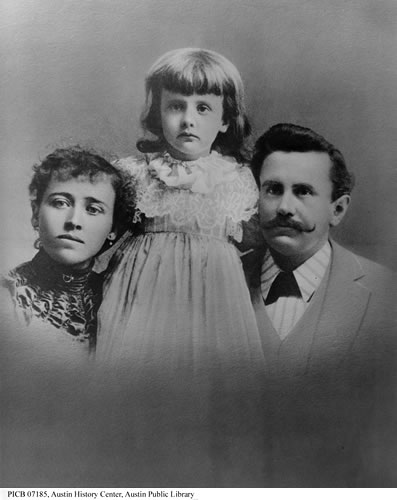
The O. Henry family in 1890s.
Sarah made her living through type writing. In the cold winter times, food was a problem. She made an agreement with the Schulenburg (Shoolenberg) Restaurant near her home. According to the agreement she would type the bill of fares for their twenty one tables each day and they had to provide her with three meals a day. When spring finally arrived it had no character of a spring. The snow of January still lay there in the streets even though it was March. And spring was already delayed a little in that American City of Manhattan. When spring arrived, there were changes in the menu of the restaurant. Soups became lighter, meat dishes changed and fried foods altogether vanished. 

Life in distant farms in the countryside can be as calm, quiet and peaceful as a gently flowing river.


Typing away dreams.
While Sarah was typing the bill of fares for the restaurant, her mind flew back to the country side she visited during the last summer. Life in distant farms in the country side can be as calm, quiet and peaceful as a gently flowing river. After the tediousness and monotony of life in a city, the life in the country side seemed to her appealing and pleasant. She had there fallen in love with a young farmer by the name of Walter. He was a very clever and modern farmer who had a telephone in his cow-house. He could even calculate cleverly the effect of Canadian wheat crops on the American prices of commodities.

Heaven sent Dandelions to show how pleased and delighted the ethereal realms were with earth.
 

Distant farms can be as quiet as a flowing river.
Sarah and Walter loved each other and he had decorated her hair with dandelion leaves and flowers as an expression of his love. She had left those flowers there for his caring and walked back home happily. We living in cities great and small can assume how much she might have wished to stay forever in those glens, vales and coves. How much will not an insecure girl wish for a safe and secure life under the protection of a loving husband! Her wishes were granted. They had agreed to get married in spring but he has not yet arrived in her town. She is awaiting him and she wept on her type writer.

No human beings are left alone. Teardrops of a loner are wiped away by invisible hands. 


Two dandelion friends catching the Sun.
In the evening the waiter from the restaurant brought Sarah’s food and the next day’s menu. While typing, a dish item in the menu caught her attention. It was ‘Dandelion with Eggs.’ Dandelions are not only a food but a symbol of love also. While typing, the very word Dandelion made her remember her long awaited lover and weep again. In her grief and tears a strange thing happened. One tear drop fell on the type written menu and one word was mistyped.

It is an invisible God that leads the way and walks a few miles with us.


The last Typewriter Factory closed in 2011 in India.

The next day, Walter from the country side arrived Sarah’s town, Manhattan searching for her. She had moved from her old address and the letter she sent him from the new address unfortunately had not reached him. Therefore he was not in a position to know about her whereabouts. He by chance stepped into the Schulenburg Restaurant and was given a menu of that day’s dishes. But what a bill of fare! There was the all distinguishable mark of a tear drop on it. ‘Dearest Walter with Eggs’ typed in place of 'Dandelion with Eggs'. And there was the tell tale characteristic of his lover- the capital ‘W’ typed above the line! The instant he sighted this strange bill of fare, Walter knew who the typist who created this laughable thing was. Without waiting, obtaining her address from the restaurant, he rushed to her house.

Image By Kirsten Ivatts0. Graphics: Adobe SP


___________________________
Pictures Courtesy: Wikimedia Commons

___________________________

Tags


American Literature, American Writers, Appreciations, English Literature, English Short Stories, English Short Story Writers, O Henry, P S Remesh Chandran, Reviews, Sahyadri Books And Bloom Books Trivandrum, Short Stories, Spring Time, Stories, Studies, William Sydney Porter


Meet the author
PSRemeshChandra

 
Editor of Sahyadri Books & Bloom Books, Trivandrum. Author of several books in English and in Malayalam. And also author of Swan : The Intelligent Picture Book.