Tuesday, May 22, 2012

028. Learning To Write Poems. Essay By P S Remesh Chandran

028.

Learning To Write Poems. Essay By P S Remesh Chandran
 
Editor, Sahyadri Books & Bloom Books, Trivandrum


01. Article Title Image By Sasin T. Graphics: Adobe SP
 
First published: 10th Jul 2011

Poems are made of human thoughts. They are the spontaneous, natural outflow of emotions evolving from close and objective observations of the things and circumstances around us. Since human mind carries a bit of cosmic world inborn in it, it cannot prevent itself from rising to elations at the revelation of truth at moments of discovery. How to create and write poems has been an eternal question, the answers to which occupy a considerable portion and major status in philosophic literature. 

Where did all the poems voiced into the jungle, mountain, sea shore, wind and running stream go? 

02. Poetry, the joy of learning and counsel of the wise.
As soon as dialect and alphabet were invented, the first poem was written. Writing poems was one of the earliest engagements of the human mind, second only to painting. Since the earliest poems were written on leaves and tree barks, they unfortunately did not survive. At least worms went through them and avian beauties sat on them. Those which were fortunate enough to be written on papyrus rolls, cave walls and rock faces survived, constantly reminding us of the naturality and delicateness from which our literature has fallen. And those which were simply voiced into the jungle, mountain, sea shore, wind and running stream never came back, but were taken to the higher realms of Ether.

Children three to five are born singers and song-makers, gifted by Nature and the Universe. 

03. Goddess of learning, weightless and deliquescent.
One who sings songs can easily learn to write poems. It helps mastering the technique of arranging sounds as words in a poem. Singing as many songs as one can will create an appetite, voraciousness and lust for creating more songs our own way. It is true that if we observe children at their ages from three years to five, they can be found to be making up their own songs and singing them to themselves melodiously. All of us have done it at that age. That is a gift from Nature and the Universe to those who are come new to this world. We will wonder whether singing would be the main pastime in the Creator's land. As we become conscious of ourselves and more and more haughty and capricious in the course of our lives, this godly faculty fades away, leaving us alone in the middle of a desert of selfishness.

How does the Goddess of all Learning, Knowledge, Poetry and Music sit on a Lotus Flower that does not submerge? 


04. Light enough to bear the weight of learning.
Poetry is a benediction of the Muses. To make it possible, the writer should be simple in mind and consider him as a nonentity. In the Hindu philosophy, the goddess of learning and music, Saraswathi Devi, is seen sitting on a lotus flower in the water, holding the musical instrument Veena. A frequently asked question is, in spite of the weight of her learning, why does not the lotus submerge. Philosophy explains that She is simple, and so her learning has not at all any weight. Therefore the first step to learn to write poems is to shed all pride, haughtiness and capriciousness from our person, and to sing as many songs as possible. Whoever sings will feel the breath of God on his back. It is said that He is standing just behind the persons who are singing. That is why they are singing.

Reattain the lost innocence, allow children to sleep in your rooms and see their sleeping night face. It is once in a life time. 


05. Age at which all are poets.
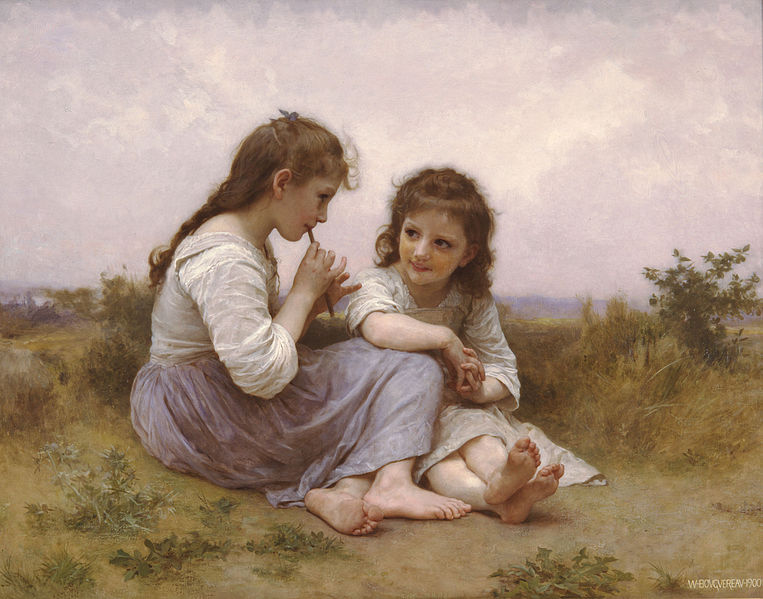
The next prerequisite to learn to write poems is to reattain the once-lost innocence. Remember that tiny little infant making songs for herself and singing all by herself. Without offending anyone, it may here be said that such tender and ardent scenes from human life can be observed and modelled upon only in communities where children are slept with parents in their room instead of in a separate baby room, and the infants are looked after by their own mothers and not by ayahs, nurses or caretakers. Anyway, imitating those infants in instant song- making is a giant step towards learning to create poetry.

A tiny stone can close the origin of a mighty stream, and the removal of one can cause the bursting out of an eternal stream.

06. Brought a piece of poetry with them when they came to this world.

Thus when the ground is set, one can begin to read as many poems as one can from the world literature. Reading the epics and classics in literature has created more poets than all the Universities and classrooms in this world combined have done. Reading of epics and classics gets us acquainted with whatever a writer of poems needs to know. Once these ground preparations are completed, one cannot help writing poems. It will come spontaneously, bursting out from the depth of the childhood innocence that is in every man. Just as a tiny stone can come rolling down and close the mouth of a stream, the removal also of a tiny stone can cause the outburst and flow of an eternal stream. Thus it is a pleasure learning to write poems. And once it is learnt, it is a source of delight to the entire world.


07. Article Title Image By Sasin T. Graphics: Adobe SP


_________________________________________
Pictures Courtesy: Wikimedia Commons.
Child And The Wise: Oil Painting by Guido Reni.
Goddess Saraswathi: Oil Painting by Raja Ravi Varma.
Child Pictures: Oil Paintings by William Adolph Bouguereau 1825-1905.
_________________________________________


Dear Reader,

If you cannot access all pages of P.S.Remesh Chandran, Editor, Sahyadri Books & Bloom Books, Trivandrum, kindly access them via this link provided here:
https://sites.google.com/site/timeuponmywindowsill/wiki-nut-articles


Tags
 
Appreciations, Essays, How Poetry Is Written, How To Write Poems, How To Write Poetry, Learning To Write Poetry, P S Remesh Chandran, Poetry, Reviews, Sahyadri Books And Bloom Books Trivandrum, Theory Of Literature, Theory Of Poetry

Comments

rama devi nina
11th Jul 2011 (#)

 
Wonderful! Bravo on your star page. This is well conceived and presented. Love the artwork choices, too. Jai Saraswati!
*Namaste*

PSRemeshChandra
12th Jul 2011 (#)


Namasthe Dear Rama Devi Nina, Thank you for going through the article. As a well-versed poet, you would be more knowing about the presence of Saraswathi Devi on your back while writing poems. Sometimes she reveals her own poems through us and seems to write for us. She passes through us as a head to hand spark. Otherwise we would not have written many of our poems, at least in my case. 

About the Author P. S. Remesh Chandran: 
 

08. Author Profile Of P S Remesh Chandran By Sahyadri Archives.

Editor of Sahyadri Books & Bloom Books, Trivandrum. Author of several books in English and in Malayalam. And also author of Swan: The Intelligent Picture Book. Born and brought up in the beautiful village of Nanniyode in the Sahya Mountain Valley in Trivandrum, in Kerala. Father British Council trained English teacher and Mother University educated. Matriculation with distinction and Pre Degree Studies in Science with National Merit Scholarship. Discontinued Diploma studies in Electronics and entered politics. Unmarried and single.

Author of several books in English and in Malayalam, mostly poetical collections, fiction, non fiction and political treatises, including Ulsava Lahari, Darsana Deepthi, Kaalam Jaalakavaathilil, Ilakozhiyum Kaadukalil Puzhayozhukunnu, Thirike Vilikkuka, Oru Thulli Velicham, Aaspathri Jalakam, Vaidooryam, Manal, Jalaja Padma Raaji, Maavoyeppoleyaakaan Entheluppam!, The Last Bird From The Golden Age Of Ghazals, Doctors Politicians Bureaucrats People And Private Practice, E-Health Implications And Medical Data Theft, Did A Data Mining Giant Take Over India?, Will Dog Lovers Kill The World?, Is There Patience And Room For One More Reactor?, and Swan, The Intelligent Picture Book.
 

Post: P. S. Remesh Chandran, Editor, Sahyadri Books, Trivandrum, Padmalayam, Nanniyode, Pacha Post, Trivandrum- 695562, Kerala State, South India.


Friday, May 18, 2012

027. Vinoba Bhave. John Spenser Essay. Reintroduced By P S Remesh Chandran

027.

Vinoba Bhave. John Spenser Essay. Reintroduced By P S Remesh Chandran 
 
Editor, Sahyadri Books & Bloom Books, Trivandrum
 
 
First published: 8th Jul 2011

Once an Australian writer wrote a book about a strange thing happening in India and developing there as a very interesting and great public movement. It was originated by an Indian scholar and saint, which gradually gained momentum and became a landmark in the history of the nation. This interesting story is reintroduced here along with its aftereffects in the recent years. Spenser is not responsible for paragraphs from four onwards in this article. 

The famous foot-marches of an Indian Saint begging for land all the way and distributing it to the poor.

The famous Australian writer John Spenser went to India to study the strange and unique Land Begging Movement of Vinoba Bhave and came back with a fantastic book which explored the question of how cultivatable land could be made available to landless people everywhere without any bloodshed. It was begging for land and giving it to the poor which could have been adopted anywhere successfully at the risk of politicians going bankrupt and jobless. Vinoba Bhave was an Indian Saint with an acute social consciousness and commitment. He made many foot-marches (Pada yaathraas) throughout India begging to rich people for a gift of land for him. In India it is difficult for people to deny a saint his request. So he obtained immense acres of land on the way and after obtaining it gave it all to the landless poor. This ingenuous technique of this great Indian Aachaarya gradually developed into a great social movement and reformation which became the Bhoo Daan Movement or Land Donation Movement. Bhoo in India means Land and Daan means Gifting. Vinoba Bhave came to be known as The Saint who Gave Land to the Poor.

The most efficient theories against communism in matters concerning land.

Cultivative land for the cultivator.
When India became free from the British Rule in the year 1947, Telengana in the Andhra Pradesh State was a region of poverty. Landlords possessed all the land and the peasants were greedily exploited not only by the landlords but by money-lenders also. As a natural consequence, the extremist communist movement of Naxalism flourished there. When Vinoba Bhave had once to visit Andhra to attend a Sarvodaya Samaaj meeting there, he decided to travel by foot from Vaarddha Aashram to Hyderabad so that he could study the people on the way. This Padayaathra or Travel on Foot became popular for many reasons. After the meeting, he travelled to the problem-torn Telengana area and held a prayer meeting at Pochempelly where he requested the rich to offer land to the poor, a willing and peaceful act on the part of the ‘haves’ for the ‘have-nots’. A moved landlord offered 100 Acres then and there which was the accidental birth of the massive Bhoodaan Movement in 1951. The inspired Vinoba began to travel from village to village collecting land. When someone refused to give land, Vinoba asked them to treat him as one of their sons and give him his due share of the land, which was dramatically successful. It was simply impossible to deny a gift to a Saint. Tens of Thousands of Acres of land were given to him willingly. Bhoodaan Movement was a token reply to the extremist communists there who were moving through the revolutionary path to attain the same objective. Bhave asked them why they came at night, and why not came by day and took land as he did, with sincerity and love. 

In North Indian States not only land but even wells, bullocks and houses were donated to the Saint. 


Here lies the way to employment and prosperity.
This brilliant success of Aachaarya Vinoba Bhave in collecting land in Andhra made Bhoodaan a national movement. It was a movement with faith in the goodness of mankind. People could be successfully influenced to give up some of their most valuable possessions to the poor. Prime Minister Jawaharlal Nehru invited Bhave to the capital city of Delhi. It was another Padayaathra collecting land all the way. He stayed in a hut near Raj Ghat, the final resting place of Mahatma Gandhi, where this Fakir was visited and listened to by the Prime Minister, President of India and the Planning Commission Members. From there he travelled by foot again to the vast Uttar Pradesh State where not only land but even wells, bullocks and houses were donated to him by exhilarated people. By then, Bhoodaan had become a great national movement in India. Nowhere in this world has such a daring and successful movement been organized by a Saint.


Ask cultivatable land for lease, and if not given willingly, confiscate forcefully and cultivate; then give the lease amount too forcefully. 


Marching to professional politics.
After the passing away of such visionaries as Aachaarya Vinoba Bhave and Jawaharlal Nehru, this great and successful movement and silent revolution of India also passed out. People no more begged for or donated land. Things reverted to their former positions of exploitation, want, poverty, aggression, encroachment, attacks, retaliation and revenge. Extremists tempted people to confiscate land where it is in plenty and remains unutilized and the landowners were the least willing to part with their land. The moderates and the extremists in the Indian Communist Movement clashed against one another on their opinions on this issue and their party was split into so many parties and groups such that the boat remains still on the shore. But one among them came up with an excellent solution to the Indian land problem. He was the venerable parliamentarian and workers’ leader A.K.Gopalan. According to his theory, unemployment and poverty are the problems of India that remain unsolved. The greatest number of job opportunities lies in land but the lions’ share of the cultivatable land is kept idling and bare by the great land owners. Therefore the unemployed and the poor shall assemble themselves and approach the land owners asking for the cultivatable land on terms of lease. If they give the land willingly, the jobless may find their jobs in the fields year round. Thus unemployment can be redressed. Because all cultivatable land is now being cultivated instead of lain waste as previously, agricultural production in the country will increase many fold and the problem of poverty also would be solved.

The world wide fear created by Jean Paul Sartre in his play ‘The Stained Hands’.
Who will give away their mother?

But what if the landlords were not willing to give their land on lease? Then confiscate the land forcefully and go through the same process as if the land was given to the needy in lease. If the land owner is not willing to accept the amount of lease, the lease amount also should be given him forcefully. It was a genuine single solution to two most important problems of India. What is disturbing in these deals is the universal fear that the principle of private ownership of land would be violated. This communist visionary’s solution was a guarantee that the private ownership of land would not be affected anyway, unemployment and poverty would be eradicated and a peaceful and silent land revolution like this could be pivotal in turning away the course of international communism. The traitors in the leadership of the Communist Parties in India were terrorized at this suggestion and they tried in all possible ways to oust this visionary from their party. Wherever and whenever possible, he was restricted, restrained and censured. Anyway he led a mass movement of encroachment of lands lain barren as a result of which governments were forced to take hold of such land and distribute it among the poor. The Indian communists are still treading in the dark laying their unsteady and wavering steps reaching nowhere, like the party leadership in Jean Paul Sartre’s play ‘The Stained Hands’ who betrayed and killed their leader, know that they have no way other than to follow the strategy laid out by him, which they can never do for fear of admitting that his views were right. 

 
___________________________
Pictures Courtesy: Wikimedia Commons
___________________________


Dear Reader,

If you cannot access all pages of P.S.Remesh Chandran, Editor, Sahyadri Books & Bloom Books, Trivandrum, kindly access them via this link provided here:
https://sites.google.com/site/timeuponmywindowsill/wiki-nut-articles


Tags
A K Gopalan, Aachaarya Vinoba Bhave, Australian Literature, Australian Writers, Bhoodaan Movement, Crisis In Communist Parties, Crisis In Communist Theories, English Literature, Essayists, Indian Land Movement, John Spenser, Land Begging Movement In India, P S Remesh Chandran, Private Ownership Of Land, Reintroductions, Sahyadri Books And Bloom Books Trivandrum, Solving Unemployment And Poverty, Writers

Comments

Denise O
9th Jul 2011 (#)

 
Great information on Vinoba Bhave and his movement. Nice read. Thank you for sharing.

 
Meet the author
PSRemeshChandra

 
Editor of Sahyadri Books & Bloom Books, Trivandrum. Author of several books in English and in Malayalam. And also author of Swan : The Intelligent Picture Book. 


Monday, May 14, 2012

026. Young Years Of Abraham Lincoln. Essay. P S Remesh Chandran

026.
  
Young Years Of Abraham Lincoln. Essay. P S Remesh Chandran

Editor, Sahyadri Books & Bloom Books, Trivandrum


First published: 5th Jul 2011
  
Sponsorship, back support and resources of large industrial empires and business houses are needed now to make a person the head of a nation, and it is not a secret too. Elections are won or lost according to the skill and riches of supporting industrialists and businessmen. Things were not so till a few decades earlier. It was an era when people said 'my cause is greater than my birth.' 

Life of Lincoln a reminder of the height of political commitment and humanitarian elation from which we have fallen. 

Lincoln giving the Gettysburg speech in 1863.

When mighty nations arose out of chaos and struggles in the past centuries, the quality of statesmanship and dedication and loyalty of the candidate to his country and his men had been the deciding factor in determining his candidature and ascension to presidentship and captaincy. Poverty, manual labour, hard work and sympathy to others went into the making of such great men. The greatest modern day politician and statesman of the world, Abraham Lincoln, is remembered more as a lover and liberator of mankind than as a President of the Unites States of Americas. The life of Abraham Lincoln is a reminder of the height of political commitment, humanitarian elation and visionary insight from which we have fallen lately. This short article attempts to outline how his earlier years were spent and how this boy who read by the kitchen firelight assumed himself to be a ruthless political fighter. His boyhood years are presented here as he grew up strong and independent enough to fight the slave owners and the slave economy of his great continent fearlessly and mercilessly. 

A vast prairee of mountains, plains, rivers and bisons that became a motherland to multitudes from every part of the world. 

First reading of Proclamation of Emancipation. 1864.

The American Continent is one of the most fertile and vast regions in the world. Discovery of this new world attracted energetic and brave adventurers from almost all corners of the world. Whoever were being intolerably exploited, oppressed and suppressed in their native lands, if possible, escaped to this new world. Their hard work, determination and dedication are what erected this mighty nation as a pillar of democracy and a beacon of hope to the world. When we read and learn about the history of America, we will wonder how hard the bygone generations of this beautiful Promised Land strove to cherish the dream and ambition of realizing and materializing a land of equal opportunities and unquestionable democratic principles. People with lesser knowledge laugh, saying America is assuming the role of World Police. But people who have read about the evils of the world from which multitudes of people escaped and migrated to America to raise a nation and a policy of their own through the centuries know better. 

The rise of American timber meat and fur industry and the coming of Western Classics.  


Boy Lincoln reading by firelight.
People of those times engaged in mostly bison hunting and trapping for furs. Raising cattle also was one of their major engagements. Huge ranches came to be established as a result of vast stretches of available pasture land and limitless availability of free-roaming bison and buffalo which only needed to be roped. Logging also developed as a major industry that provided employment to millions of people. America supplied timber, meat and fur to many countries. American timber, meat and fur industries owe their origins to those times of adventure and migration. The magnificent life of the brave and bold people of those times constitutes a memorable part in English Literature also in the form of the Great Westerns written by Louis La Amour and the like. But a period of boom will not last. Land, and resources like bison raccoon beaver and trees, began to be less and less available and people began to move. In fact, movement of people across endless plains and along broad river basins in quest of a new life is the characteristic of this part of the American history.

The great march of the early American settlers to the west, across plains and along river basins. 


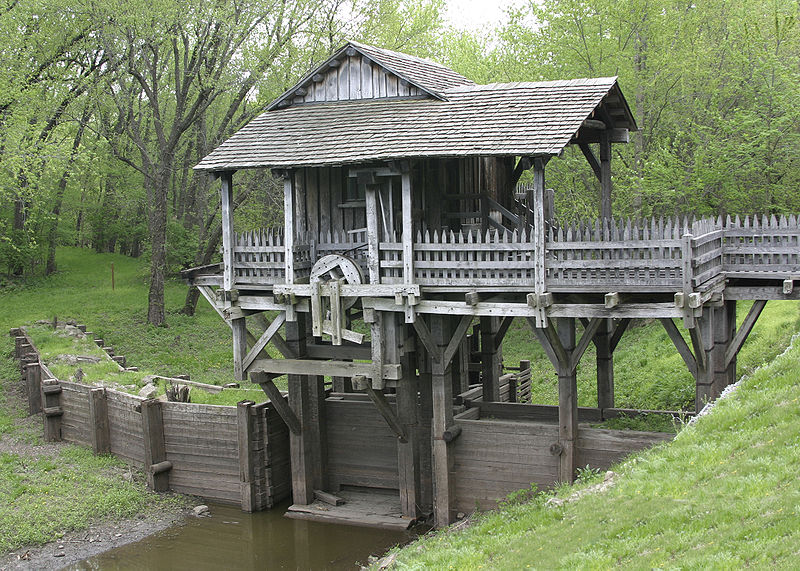
A saw and grist mill in Lincoln's time. Illinois.
When the early settlers of America began their great march to the West, new states were formed on their way, the earliest one among them being Kentucky. It was a beautiful state with dense forests, trees and far-stretching grass lands where Abraham Lincoln was born in a small farm and brought up to eight years. There his beloved mother taught him to read books, and in the evenings sat with him by the fireside telling him stories. Those were the unforgettable years of his primary education. Then the family moved further west, crossed the great Ohio River and settled in the newly formed state of Indiana which had no cities, towns and villages, but forests, forests and forests alone.

Agriculture, manual labour, walking, reading and education: The constituents of a brave world citizen. 


Lincoln's log cabin, now a national treasure.
Trees were cut, they cleared the forest and built an eighteen feet square log house which had a loft in the roof and that was Abe's bed. Even the eight year old Abe was given an axe to help in the work- the initial training which made Abe Lincoln, an Able Lincoln. This lonely family cleared the ground and planted corn, hunted game in the forest and caught fish from the rivers. After his hard work in the fields and forests, he found one or two hours daily to read books by the firelight, among which the Bible, John Banyan's The Pilgrim's Progress, Life of George Washington and Aesop's Fables were his favourites. He was an avid reader. When a school master came to live many miles away, young Lincoln and his sister daily walked this long distance to and fro to learn things. At his eleventh year his mother passed away and two years later his father presented them with a new mother who was kind and took care of the children extremely well.

A village where all had log cabins and all worked from morning till night. 


The neat village of Lincoln in New Salem.
Lincoln’s life has been summed up as 'From Log House to the White House' which is only a romantic statement far from reality. All people in his village had log houses. There were trees thick-packed everywhere. When ground had to be cleared for building a house, what will one do with the trees cut down from there? It cannot be moved to another tree-saturated spot. And timber was the natural and abundant building material available there. In fact, there were many beautiful log houses constructed there in his village. The doctor, school, post office, everything in the village was housed in log cabins. In one, once Lincoln ran a store which gained him an additional name, 'Honest Abe'. It was really the physical strength and free spirit he gained during those times that gained America a fearless President.

If trees were heard falling in the forest one after the other, everyone knew Abraham Lincoln was at work. 


Lincoln's neighbors in New Salem.
There have been questions on the tallness of Abraham Lincoln for which there has been only one logical answer- good food, hard labour and a clean environment. At seventeen, he was Six feet Four inches tall and he grew big and strong each day. Timber cutting was their livelihood and he cut more trees than any other person in his village a day. If in the forest trees were heard falling one after the other, people knew that Lincoln was at work. He was the prize-winning runner, jumper, swimmer and shooter in the village. Long walks in the hills and forests were his hobby. He hated to kill. Animals, birds, trees, rivers and snow, all shared his ardence. And he liked debates, arguments and talking and assembled his friends till midnight doing these things. Once he walked thirty four miles to hear a famous lawyer speak and see him setting free through his eloquence and oratory skills an innocent man accused of murder. It was then and there that the impressed Abe decided to make himself a lawyer. So in the woods he made imaginary speeches to the trees and birds, perfecting the skill. And thus his teen years were over.

Birth of a young man determined to make the world free of oppressors, suppressors, dictators and slave owners. 


The rapids and falls Lincoln's boat maneuvered.

But the World remember him for his two great acts, preventing the young United States from separation in a civil war and abolishing slavery as a guiding beacon to this world. It is true, the southern states in America had so many cotton plantations and depended much on the easily and cheaply available slave labour for the stability and balancing of their economy. It was also true that not all planters were as cruel and rude to their slaves as many. But there indeed was insufferable tyranny, neglect and torture in most quarters. And as a principle, the freedom of man, whether Negro, slave, African or any other began to be considered of paramount importance. Naturally abolition of slavery resulted in a civil war in which the young nation might have been torn and separated but for the strong political will of Lincoln. This course of historical events was made possible through an adventurous journey undertaken by Lincoln at twenty one, so it cannot be left out here. He with his friend following the business advice of his father undertook a One thousand Eight hundred mile journey in a small boat down the Mississippi which is one of the greatest rivers in this world. Their destination was New Orleans where they reached enduring rapids and human attacks on the way. There for the first time in his life he saw slave labourers working in the cotton plantations. Also he saw slave markets where people were auctioned, bargained and sold. The humiliation and pain he saw in the eyes of those girls, mothers, children and men being sold in auction in markets there made his determination to wipe out this human evil from the face of this earth for ever and to make this world free of oppressors, suppressors, dictators and slave owners, which in time culminated in the firm policy of his nation.


____________________________ 
Pictures Courtesy: Wikimedia Commons
____________________________


Dear Reader,

If you cannot access all pages of P.S.Remesh Chandran, Editor, Sahyadri Books & Bloom Books, Trivandrum, kindly access them via this link provided here:
https://sites.google.com/site/timeuponmywindowsill/wiki-nut-articles


Tags


Abraham Lincoln, America In The Making, American History, American Idol, American Literature, American Presidents, American Values, English Literature, Essayists, P S Remesh Chandran, Reintroductions, Sahyadri Books And Bloom Books Trivandrum, Writers, Young Years Of Abraham Lincoln


Comments

Steve Kinsman
8th Jul 2011 (#)

 
This is a fantastic article, well researched and very well written. Congratulations on a well-deserved star page, PSRemeshChandra.

Denise O
8th Jul 2011 (#)

 
Darn good information on Abraham Lincoln. Also great writing. Congrats on the star page, it is well deserved. Thank you for sharing.
PSRemeshChandra
8th Jul 2011 (#)

 
Dear Steve Kinsman,
Dear Denise O,

Abraham Lincoln is one of the few world leaders whom I respect most. When I was a school student, I had opportunity to read many things about Lincoln which I have not forgotten still. They were taught me in the class by my father who was also my class teacher and English teacher in the school and an admirer of Abraham Lincoln. Those incidents include his excellent jokes which were many. Once he asked a neighbour if he would take his coat to the town in his cart. The neighbour asked him when and how Lincoln would be going to get his coat back. Lincoln's reply was that he intended to stay inside his coat. His hands were not only strong to cut trees down within moments, but quick also to help the poor without even them knowing about it. His lawyer profession was solely for helping the poor and the innocent, and practically gained nothing by way of fees. There are excellent stories of him rescuing many innocent people from the labyrinth of law. Thank you for your appreciation of the article.


Meet the author
PSRemeshChandra

 
Editor of Sahyadri Books & Bloom Books, Trivandrum. Author of several books in English and in Malayalam. And also author of Swan : The Intelligent Picture Book. 

Wednesday, May 2, 2012

025. Good Manners. J C Hill Essay. Reintroduced By P S Remesh Chandran

025.

Good Manners. J C Hill Essay. Reintroduced By P S Remesh Chandran

 
Editor, Sahyadri Books & Bloom Books, Trivandrum


First published: 4th Jul 2011.  
 
We are staying on this planet only for a very short time. Before it is a hundred years, our times are out. We will never see those who we live with again in our lives. Perhaps we will never see a human face again. This is our only chance to see, acquaint with and deal with human beings. So why not behave politely, and please them and help them? A famous British writer's observations are reintroduced here. 

Are you a Boy-Scout? No, I am an egg on toast. 


A young boy scout of 1914. Australia.

The famous writer J.C.Hill has written a few things on the various factors constituting what good manners are. Men are fragile things come to live in this dangerous world. We are unimportant humble little human beings who shall not pass this way again. During our short stay here, we should help the world as much as we can. A child would not be knowing about the sufferings of his parents, which they would not be willing to tell him. So children should make life easy for them. Good manners come from sympathy with others and from understanding our own limitations. We should strain and train ourselves to remain calm before irritating questions. Once when an old lady, seeing his dress, asked a little boy whether he was a Boy Scout, he was irritated and rudely barked that he was 'two eggs on toast'. She only meant how nice he looked in a nice uniform and there was really nothing silly in her remark. This is considered improper behaviour towards older people. 

Good listeners get enough time to think so that when they speak, they can speak clearly. 
Listeners to Orpheus: Nymphs by the stream.

Suppose an old man is crossing a young racing cyclist very slowly. The speeding cyclist would be annoyed and irritated at this unexpected obstacle and barricade on his way. Do not scold him for being that slow. He may be weak and losing his agility. A healthy young man who never cared for others once became seriously ill and when he recovered, he was very weak and had to remain so for a few days. Even walking became very difficult for him. It was then that he realized the misery of weak and old people who get no seats in transport buses. He will get back his strength someday but those old people will never get back their's. So from then onwards he promptly gave up seats for the weak and aged in buses. While in company, we should be very careful in observing good manners. We should speak clearly and sufficiently loud for others to hear us. It is our duty to make ourselves understood. And do not talk too much. Always give others a chance to speak.

Delighted to hear one's own voice resounded from everywhere. 
Eve listening to Voice for the first time.
Some people are delighted to hear their own voice resounded from everywhere and always, and some young men and young women talk away their lives, thinking the company is delighted to hear them, but every one there would really be exhausted and angry at their unpolished and rude behaviour. Good listeners get enough time to think. Don't say unpleasant things about some one on his back. Such remarks will usually find its way to that person. Always adjust your remarks, thinking that the very person would be overhearing you.
It takes two to speak the truth-one to speak and another to hear. 
Slacken our paces when passing the infirm.

Many often, what we speak will not be the truth. We shall not hold it that what we speak is truth. The acclaimed American writer Thoreau once said that 'it takes two to speak the truth- one to speak and another to hear.' Truth differs from person to person. Socialism might be control of commerce and industry to some, but it is robbing the riches of others to some others. What we think to be true needn't always be true. J.C.Hill sites an example. Some students were once shown a picture of a bull-fight and asked later to describe it from memory. One said, a bull's tongue was out. Actually the bull's mouth was closed, but because its head was turned to the side, its ear had looked like a tongue. So whenever we argue with somebody about a point, think that always there is always a chance of us going wrong.


___________________________
Pictures Courtesy: Wikimedia Commons

___________________________

Dear Reader,
If you cannot access all pages of P.S.Remesh Chandran, Editor, Sahyadri Books & Bloom Books, Trivandrum, kindly access them via this link provided here: 
https://sites.google.com/site/timeuponmywindowsill/wiki-nut-articles 


Tags

British Writers, English Literature, Good Manners, J C Hill, P S Remesh Chandran, Sahyadri Books And Bloom Books Trivandrum, Short Stories

Comments 

PSRemeshChandra
4th Jul 2011 (#)


When I am walking a way, sometimes I would see old men, women and sick people on the way who strain to walk. I know how they would feel when somebody passes them from the back in full health, vigour of strength and agility of body, for I am a quick walker. So I slacken my steps in whatever hurry and urgent need may I be, so that they may think they are not the only persons who have lost strength. It is our duty not to make them offended, hurt and pining in hearts for their lost health. 

Steve Kinsman
5th Jul 2011 (#)


Very nice article. Thank you.

PSRemeshChandra
5th Jul 2011 (#)


Thank you Steve Kinsman for reading it. I have gone through and very much enjoyed your works. I am trying to improve myself to stand in level.


Meet the author
PSRemeshChandra

 
Editor of Sahyadri Books & Bloom Books, Trivandrum. Author of several books in English and in Malayalam. And also author of Swan : The Intelligent Picture Book.